Tutorial 3
Unified Modelling and Active Damping Control for Grid-following Inverter with LCL Filter and Multi-mass Motor Drive systems based on Electrical-Mechanical Analogy Principle
Voltage source inverters (VSIs) are widely used for grid integration and motor drive systems, where LCL filter resonance and inertia J-spring stiffness K-inertia J (JKJ) mechanical resonance represent two typical resonance phenomena. However, most research works for these two systems were carried out independently. It is found that the mathematical models and control structures are fundamentally the same. More importantly, both systems share a key active-damping challenge: suppressing the dominant resonance without destabilizing other modes. In multi-mass motor drives, this relates to avoiding excitation of higher torsional modes, while in LCL-filtered inverters, control delay and phase lag can weaken or even reverse the effective damping.
This tutorial aims to unify modelling and active damping for LCL and JKJ system, so that the existing or future potential active damping control algorithms used in one system can be applied in the other system to avoid reinventing the wheel. The primary objectives include:
1. Unify the modelling and active damping for LCL and JKJ system with examples provided.
2. Introduce the state-of-art active damping control methods for grid-connected inverter with LCL filter.
3. Introduce the state-of-art active damping control methods for elastic motor drive system with JKJ characteristics in the rotor side.
4. Introduce practical active-damping design for digitally controlled grid-following inverters with LCL filters, including delay-induced damping degradation, phase compensation, and passivity-oriented admittance shaping.
This tutorial will cover several innovations as below,
(1) For motor drive with multi-rotating mass system with multiple resonance frequencies, controller design guidelines are provided to suppress the first mode torsional vibration while ensuring the other resonance modes will not be excited during step load change.
(2) For modularized dual motor drive system to supply a common mechanical load, systematic controller design methods are provided to achieve optimized power sharing, dynamic response, and torsional vibration suppression performance simultaneously.
(3) For digitally controlled grid-following inverters with LCL filters, controller design guidelines are provided to suppress the target LCL resonance while ensuring that control delay and phase lag do not introduce negative damping or excite high-frequency oscillations. Phase-compensated active damping and passivity-oriented admittance shaping are used to extend the effective positive-damping range.
The tutorial will cover the following key topics:
(1) Unified Active Damping Control Algorithm of Inverter for LCL Resonance and Mechanical Torsional Vibration Suppression
(2) Torsional vibration suppression control for inverter driven multi-rotating mass system.
(3) Mechanical Power Sharing and Torsional Vibration Suppression Control for Dual Motor Drive System
(4) Phase-Compensated and Passivity-Oriented Active Damping Control for Digitally Controlled Grid-Following Inverters with LCL Filters
In the electrical engineering field, there are two types of system which can potentially generate resonance under excitation, one is the electrical system with inductor and capacitor, the other is the electromechanical system with spring-mass characteristic. A lot of research on active damping control algorithms for grid-following inverters with LCL filter and inverter-driven machine with multi-rotating masses have been demonstrated. However, research works for these two systems were carried out independently and there is a lack of systematic comparison for modelling and control between these two systems. This presentation will unify the mathematical models and active damping control algorithms for these two systems. It is found that the mathematical models and control structures are fundamentally the same.
More importantly, both systems share a common active-damping challenge: the target resonance should be suppressed without destabilizing other modes or frequency ranges. In multi-mass motor drives, this means avoiding the excitation of higher torsional modes, whereas in digitally controlled LCL-filtered inverters, control delay and phase lag may weaken or even reverse the equivalent damping. Phase-compensated active damping and passivity-oriented admittance shaping will therefore be introduced to maintain effective positive damping over the relevant frequency range.
The existing or future potential active damping control algorithms used in electrical system can be applied in electromechanical system and vice versa to avoid reinventing the wheel. Finally, simulation, experimental and hardware-in-loop tests were done to verify the findings.
Tutorial Speakers
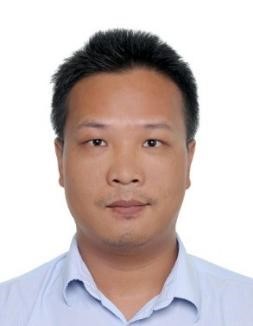
Xiong Liu
Jinan University, China
Xiong Liu received the B.E. and M.Sc. degrees in electrical engineering from the Huazhong University of Science and Technology, Wuhan, China, in 2006 and 2008, respectively, and the Ph.D. degree in electrical engineering from the School of Electrical and Electronic Engineering, Nanyang Technological University, Singapore, in 2013.
From September 2011 to January 2012, he was a Visiting Scholar with the Department of Energy Technology, Aalborg University, Denmark. From April 2012 to December 2013, he was a Researcher with the Energy Research Institute, Nanyang Technological University. From December 2013 to July 2020, he was a Principal Technologist in Rolls-Royce Electrical, Rolls-Royce Singapore Pte. Ltd., Singapore. During the work in Rolls-Royce, he has led various research projects in Rolls-Royce@ NTU Corp Lab and supervised 3 Ph. D students. From September 2020 till now, He is an Associate Professor with the Energy Electricity Research Center, International Energy College, Jinan University, Zhuhai, China. His research interests include power electronics, motor drive, and electrical/hybrid propulsion system for marine and aerospace.
In his current position, he has led various research projects including one NSFC funded project, and won the sponsorship from Major Talent Program of Guangdong Province. He has published more than 70 papers including 16 first and corresponding authored tier-1 top SCI IEEE Transactions papers, 6 patents granted in US or Europe, and a few Chinese granted/filed patent applications. He has been nominated as World's Top 2% Scientists 4 times by Stanford and Elsevier in 2020, 2021, 2022, and 2024 respectively. He received the Innovation Award for IEEE Competition on Energy Access and Off-grid Systems in 2026.

Songtao Huang
Nanyang Technological University, Singapore
Songtao Huang received the B.S. degree in School of Control Science and Engineering from Shandong University, Jinan, China, in 2017, and the Ph.D. degree in School of Artificial Intelligence and Automation from Huazhong University of Science and Technology, Wuhan, China, in 2023.
He subsequently worked as a Postdoctoral Researcher at Huazhong University of Science and Technology and as a Visiting Research Associate with the Department of Engineering, King's College London, London, U.K. He is currently a Research Fellow with the Energy Research Institute, Nanyang Technological University, Singapore.
His research interests focus on the modelling, control, and stability of power electronic converters, particularly grid-connected inverters, resonant and multiresonant control, active damping, impedance- and passivity-based stability analysis, digital control effects, weak-grid interaction, and multi-inverter systems. He is a Member of the IEEE and has published 25 IEEE/EI-indexed papers, including 10 as first or corresponding author. He has led two laboratory open-fund research projects and holds five Chinese invention patents. He serves as a reviewer for several leading IEEE and IET journals in power electronics, power systems, and renewable energy, as well as a Technical Program Committee Member for SPIES. He also served as a Session Chair at ICIEA 2026.
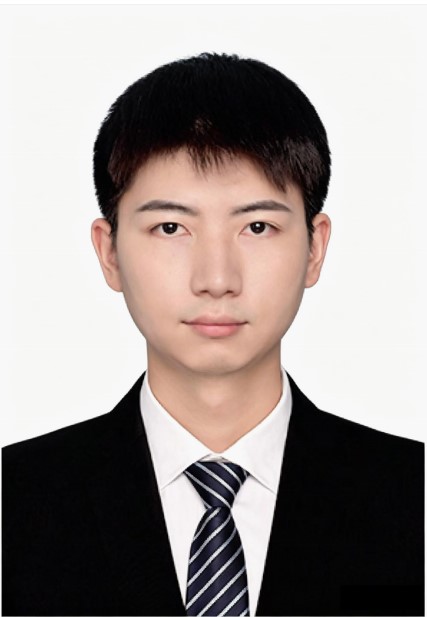
Yukai Huang
King's College London, United Kingdom
Yukai Huang received the B.S. degree in Automation in 2020 and the Ph.D. degree in Control Science and Engineering in 2025, both from the School of Artificial Intelligence and Automation, Huazhong University of Science and Technology, Wuhan, China. He is currently a Research Associate with the Department of Engineering, King's College London, London, U.K.
His research interests focus on the modelling, control, and stability of power electronic converters and inverter-dominated power systems, particularly grid-connected inverters, impedance-based stability analysis, wideband oscillation and resonance suppression, digital control effects, weak-grid interactions, grid-forming control, and multi-inverter systems. His research also involves high-power power electronic conversion systems and grid emulation, including the modelling, control, and experimental validation of medium-frequency converters and high-power grid emulators.