Tutorial 1 (Flyer Download)
Control and Protection of Power Electronics-Dominated Power System
Objectives and motivation
The rapid transition toward carbon neutrality has led to a paradigm
shift in power systems, moving from traditional synchronous
machine-based architectures to power electronics-dominated power
systems. With the high penetration of inverter-based resources, the
system exhibits complex dynamics that differ significantly from
conventional systems. Traditional control and protection schemes are
facing unprecedented challenges, such as resonance instability,
fault current limiting, and protection maloperation.
This tutorial aims to introduce advances in modeling, control, and
protection for power electronics-dominated power systems. The
primary objectives include:
1. Providing a comprehensive understanding of dynamic behaviors of
grid-following and grid-forming converters under complex grid
conditions.
2. Analyzing the fundamental conflicts and coordinated control
between protection relays and inverter-based resources.
Novelty and Technical Innovations
This tutorial introduces the connection and the challenge between
converter-level control dynamics and system-level protection. The
novelty lies in two aspects: (1) revealing control dynamics of
grid-following converters and grid-forming converters under complex
grid conditions; (2) introducing coordinated methodologies that
synchronize damping controllers with protection relays.
Tutorial content:
Part 1: Stability analysis and damping design of grid-following
converters
Part 2: Stability analysis and damping design of grid-forming
converters
Part 3: Coordinated control and protection strategies for
inverter-based resources
This tutorial provides a comprehensive analysis of grid-following
and grid-forming control architectures within power
electronics-dominated power systems. It begins by exploring the
fundamental dynamics and grid-support functionalities of converters,
followed by a detailed assessment of their impact on conventional
protection schemes. By integrating converter control theory with
protection engineering, this tutorial offers practical insights into
ensuring the stability and security of future inverter-dominated
grids.
Tutorial Speakers

Shan He
Hefei University of Technology, China
Shan He (Senior Member, IEEE) received the B.S. degree in
electrical engineering from Northeast Electric Power University,
Jilin, China, in 2015, the M.S. degree in electrical engineering
from Zhejiang University, Hangzhou, China, in 2018, and the Ph.D.
degree in electrical engineering from Aalborg University, Aalborg,
Denmark, in 2022.
From 2022 to 2025, he worked as a Postdoc with Department of Energy,
Aalborg University, Aalborg, Denmark. In 2021, he was a Visiting
Researcher with RWTH Aachen University, Aachen, Germany. In 2023, he
was a Research Associate with Kiel University, Kiel, Germany. In
2025, he was a Visiting Researcher with Norwegian University of
Science and Technology, Tronholm, Norway. He is currently a Full
Professor with School of Electric Engineering and Automation, Hefei
University of Technology, China. His research interests include
renewable energy integration, energy storage, and nuclear fusion.
Dr. He was the recipient of Nordic Energy Challenge Award, Future
Digileader Award, IES-SYPA Award, and PCMP Best Reviewer Award. He
served as Guest Associate Editor for IEEE TRANSACTIONS ON POWER
ELECTRONICS, Guest Managing Editor for INTERNATIONAL JOURNAL OF
ELECTRICAL POWER & ENERGY SYSTEMS, Associate Editor for Q1 Journals
PROTECTION AND CONTROL OF MODERN POWER SYSTEMS, ENGINEERED SCIENCE.
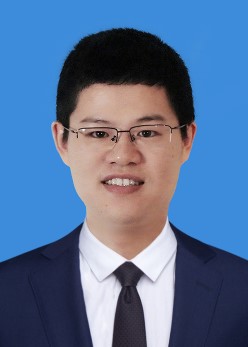
Chao Wu
Shanghai Jiao Tong University, China
Chao Wu (Senior Member, IEEE) received the B.Eng. degree from He
Fei University of Technology, Hefei, China, in 2014, and the Ph.D.
degree from Zhejiang University, Hangzhou, China, in 2019, both in
electrical engineering.
Currently, he is an Associate Professor with the Department of
Electrical Engineering, Shanghai Jiao Tong University, Shanghai,
China. From 2019 to 2021, he was a Postdoctoral Researcher with the
Department of Energy Technology, Aalborg University, Aalborg,
Denmark. His research interests include modeling, control, and
stability analysis of power electronics in renewable energy
applications.

Guoqing Gao
Aalborg University, Denmark
Guoqing Gao (Member, IEEE) received the B.S. degree from Xidian
University, Xi’an, China, in 2017, the M.S. degree from Xi’an
Jiaotong University, Xi’an, China, in 2020, and the Ph.D. degree
from Aalborg University, Aalborg, Denmark in 2024, all in electrical
engineering.
Since 2024, he has been with the Department of Energy Technology,
Aalborg University, as a Post-Doctoral Researcher. He is currently a
Carlsberg Internationalization Postdoctoral Fellow with Imperial
College London, Oxford University, and Aalborg University.
He serves as a CIGRE Working Group Member (JWG C4/A3.79: Temporary
Overvoltage Protection Technologies for High-Voltage Transmission
Systems with Large-Scale Renewable Energy Bases), Leading Guest
Editor for Electronics and Guest Editor for Frontiers in Energy
Research. His research interests include control, protection, and
stability analysis of power electronic converter interfaced grids.