Keynote Speeches

C. K. Michael Tse
City University of Hong Kong, Hong KongChi K. Michael Tse graduated from the University
of Melbourne. He has held a Chair Professorship since 2005, and is
currently a Chair Professor of Electrical Engineering at City
University of Hong Kong. His concurrent leadership roles as
Associate Vice-President (Innovation) and Director of the Academy of
Innovation involve the management of a large-scale integrated
investment, incubation and education platform for venture creation.
He is/was honorary professor and distinguished fellow with several
Australian, Canadian and Chinese universities, including Melbourne
University, RMIT University, University of Western Australia,
University of Calgary, Huazhong University of Science and Technology
(being Chang Jiang Scholars Chair), Northeastern University, etc.
His research interests are in power electronics and nonlinear
systems.
He has been awarded numerous invention, research and teaching
prizes. Among them, the IEEE CASS Charles A. Desoer Technical
Achievement Award 2022 recognized his "outstanding contributions and
continued leadership in the development of research in complex
behavior of power electronics and energy systems". He was twice
recipient of the President's Award in Research while working with
The Hong Kong Polytechnic University. He has been listed in the top
2% of the Stanford’s ranking list (science-wide databases of
standardized citation indicators), and was ranked 28th worldwide
(among 111,935 scientists in this subfield) for his career-long
impact in the subfield of Electrical and Electronic Engineering.
Since 2023, he has made a series of pledges to create a number of
scholarships for undergraduate students in Hong Kong and Australia.
In April 2025, partnering with a local painter, he staged a duo
exhibition "Blooming Calligraphy" at Carrousel du Lourve, Paris.
Title: Negative Reactance for Future Power Applications
Negative inductance does not exist in the real world. Such absence limits the development of many electrical systems and the removal of undesired inductance, which has long been addressed by complicated resonance-based compensation methods. In this talk, we present a practical realization of negative inductance for power processing applications that will open up an entirely new direction for electrical systems design and can lead to significant improvement in power efficiency. We show how to obtain a standalone negative inductance that can directly cancel an existing positive inductance or any portion of it. This breakthrough contributes to the advancement of negative reactance technologies beyond the small-signal limitations of conventional analog impedance converters. The negative inductance device introduced here offers convenient manipulation of inductive properties that can significantly enhance efficiency and power capacity, opening new avenues for sustainable energy applications.

Akshay Kumar Rathore
National University of Singapore, SingaporeAkshay Kumar Rathore is a Professor and Director
of Power and Energy Research Area in the department of electrical
and computer engineering at the National University of Singapore.
His research focuses on power electronics and control of electric
motor drives. He is an IEEE Fellow and a recipient of several
prestigious awards, such as IEEE IAS Andrew W Smith Outstanding
Young Member Achievement Award, Isao Takahashi Power Electronics
Award, IEEE David Irwin Early Career Award, IEEE Bimal Bose Award
for Industrial Electronics Applications in Energy Systems, Nagamori
Award, and the distinguished alumnus award (young achiever) from IIT
(BHU) Varanasi, India.
Prof. Rathore has contributed to above 300 papers on soft-switching
current-fed DC/DC converters, multilevel inverters, and DCM
rectifiers, including about 110 IEEE Transactions. He edited a book
on advanced concepts and technologies for electric transportation,
published by CRC Press in 2022. He has delivered above 200 invited
talks, keynotes, and tutorials in several events across the globe.
Presently, he is a Distinguished Lecturer of the IEEE Power
Electronics Society, an IES Society AdCom member, Chair of the IEEE
IAS Andrew W Smith Outstanding Achievement Award Committee and is
serving on the committees of the IEEE Medal in Power Engineering,
IEEE Nikola Tesla Award and IEEE Fellow Committee.
Title: Multifunctional DCM Power Converters with Natural PFC and Simplified Control
AC/DC power electronic converters are employed in majority of the consumer electronics as well as in industrial applications including electric vehicle (EV) battery recharging application. Power factor correction (PFC) through active front-end conversion is essential instead of diode rectifiers to obtain high efficiency and meet the power quality requirements such as unity power factor (UPF), low total harmonic distortion (THD), etc. Discontinuous conduction mode (DCM) mode of operation of power electronic converter is known for reduced inductor size and inherent zero current switching of the power semiconductor devices. In addition, DCM mode of operation offers natural PFC without the requirement of source (grid) current waveshaping and phase locked loop (PLL) and that too with a single sensor single loop control. Thus, DCM simplifies the PFC control system requirements (hardware and software) and makes it robust. The same topology is also operated as DC/DC converter. This talk will share a few isolated and non-isolated novel AC/DC PFC power electronic topologies for the battery charging application along with their merits, design, experimental results, and performance evaluation.

Hoay Beng GOOI
Nanyang Technological University, SingaporeHoay Beng Gooi obtained his PhD from The Ohio State University, USA. He is an Emeritus Associate Professor of the School of Electrical and Electronic Engineering (EEE), Nanyang Technological University (NTU), Singapore. During his academic career at NTU, he served as Deputy Head (Power Engineering), Founding Co-Director of the Singapore Power (SP)-NTU Joint Laboratory, and Director of the Renewable Energy Science and Technology Master's Programme jointly offered by NTU and École Polytechnique, France.
Professor Gooi has made significant contributions to power and energy engineering research, leading and co-leading projects with total funding exceeding US$10 million, including advanced microgrid, battery energy storage, and smart energy system initiatives. He served as an Editor of the IEEE Transactions on Power Systems and received the 2021 Outstanding IEEE Transactions on Power Systems Editor Award.
He is a registered Professional Engineer in Singapore and Pennsylvania, USA, an independent microgrid consultant, and an IEEE Life Fellow. He currently serves as Industry Relations Executive Committee Member, and Chair of the Life Member Affinity Group (LMAG), IEEE Singapore Section. He actively mentors and hosts international research students, including China Scholarship Council (CSC) scholars, at EEE, NTU.
Title: Inverter‑Dominated Power Systems: Grid‑Edge Intelligence, Virtual Inertia, and AI‑Driven Stability
The rapid global shift toward inverter dominated power systems is reshaping how renewable-heavy grids deliver stability, flexibility, and resilience. As synchronous machine inertia declines, stability increasingly depends on advanced control strategies such as virtual inertia support, adaptive damping control, and grid forming inverter technologies. Recent disturbances, including the 2025 Iberian (Spain Portugal) blackout, demonstrate the urgency of coordinated synthetic inertia injection and adaptive damping to prevent fast frequency collapse and oscillatory behavior. At the same time, grid edge intelligence, enabled by grid-interactive distributed energy resources, bidirectional EV charging, distributed storage, and IoT edge analytics, is transforming consumers into active stability participants. Complementing these developments, AI driven operational tools are emerging for probabilistic dispatch, dynamic congestion management, and autonomous fault response.
This keynote synthesizes global advances from 2024 2026 and contextualizes their implications for Singapore's evolving energy landscape, highlighting pathways toward resilient, flexible, and intelligent inverter dominated grids. It will highlight Singapore's strategic efforts in developing regional power grids and its ambitious initiatives to achieve net-zero emissions by 2050 by incorporating sustainable energy sources like solar, wind, and hydropower.

Kwok Wai Ma
Infineon, SingaporeKwok Wai Ma graduated from Hong Kong Polytechnic University, with Bachelor degree in Electronics Engineering and Ph.D. in Power Electronics, in 1988 and 1995 respectively. He joined Infineon Technologies in 2005 and is currently Senior Principal Engineer, leading all system application engineering activities in Asia Pacific region for Industrial and Consumer Power applications, from product application, application development, technology launch and application innovation, in wide range of appliance, industrial and infrastructure applications. Since 2014 he has led the technology launch activities of SiC power device in Asia.
Title: Application-driven Power Semiconductor Technology Development
Why “old” thyristor and JFET technologies fit well to emerging DC grid applications like solid-state transformers (SST) and solid-state circuit breakers (SSCB), and why GaN HEMT are revitalizing “old” matrix topology? These examples illustrate how power electronics application requirements drive device innovation, while power semiconductor device advances enable superb system performance.
Power semiconductor device technology often start from planar cell structure and gradually develop, to Super-Junction structure for MOSFET, and to Trench, FieldStop and Micro-Pattern Trench structure for IGBT, to achieve major performance breakthrough. Within the boundary of each major technology generation, design trade-off and optimization amongst figure-of-merits of conductivity, switching loss, robustness, reliability and controllability enables differentiated device generations tailored to diverse application needs.
Wide-bandgap semiconductors, particularly silicon carbide (SiC) and gallium nitride (GaN), are transforming power electronics through superior switching and conduction performance. In addition to improving system efficiency and power density, these technologies enable applications that were previously not practical with silicon devices, such as ultra-fast DC EV charging and AI data-center power architectures.
Packaging technology remains a critical enabler of power semiconductor innovation, which realize the overall device performance in aspects of voltage, current, temperature, thermal resistance, stray inductance, lifetime and manufacturing automation. Package innovation goes hand-in-hand with package standardization.
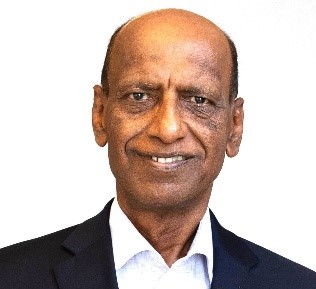
Kaushik Rajashekara
University of Houston, USAKaushik Rajashekara (Fellow, IEEE) received the Ph.D. degree in electrical engineering from the Indian Institute of Science, Bangalore, India. He held various lead technical and managerial positions at Delphi/General Motors (1989–2006), serving as Technical Fellow and Chief Scientist for propulsion and power electronics systems for electric, hybrid, and fuel cell vehicles. From 2006 to 2012, he was a Chief Technologist for electric systems for electric and hybrid electric aircraft systems at Rolls-Royce Corporation. He is currently the Hugh Roy and Lillie Cranz Cullen Distinguished University Professor at the University of Houston. He has authored over 300 papers, holds 37 US and 15 foreign patents, written one book, and delivered over 250 invited presentations worldwide. His honors include the Global Energy Prize, the IEEE Medal for Environmental and Safety Technologies, and the IEEE Richard Harold Kaufmann Award. He is a member of the U.S. National Academy of Engineering, a Fellow of the National Academy of Inventors, and an International Fellow of the Indian, Chinese, Canadian, Japanese, and Pan American Academies of Engineering. He is also a Fellow of the European Academy of Sciences. His research interests include power conversion, transportation electrification, renewable energy, and microgrid systems.
Title: DC Fast Charging Technologies for Electric Vehicles and Impacts on the Grid
Fast charging of electric vehicles plays an important role in adoption and widespread use of electric vehicles. Fast charging provides a practical solution for drivers, allowing them to recharge their vehicles in just 10 to 15 minutes, enabling an additional 300 to 400 km of travel— or even more, depending on the vehicle and charger capacity. As a result, advancing fast-charging technology and expanding its deployment have become increasingly important. In parallel, significant progress is also being made in battery technology to enhance driving range and improve charging efficiency. This presentation will cover a brief overview of recent advancements in battery technologies, EV fast charger requirements and technical specifications. In addition, fast chargers in both AC and DC distribution networks and the impact of fast charging on the power grid will be presented. Finally, the emerging trends will be discussed.