Special Session 2 (Flyer Download)
Advanced Energy Conversion and Charging Systems for Robotics and Electrified Mobility
The development of advanced power conversion
and drive technologies has become a fundamental enabler for the
continuous evolution of robotic systems and intelligent mobile
platforms. As service robots, industrial robots, electric vehicles,
and automated equipment increasingly demand higher efficiency,
higher power density, greater intelligence, and deeper system
integration, power electronic technologies for robotic joint drives,
wireless power delivery, and energy management are playing an
increasingly critical role. Whether in robotic motor drive systems,
DC–DC energy conversion for vehicular and mobile platforms, or
wireless charging and dynamic power supply scenarios, advanced power
converters are essential for ensuring reliable operation and
performance optimization.
In recent years, the rapid advancement of wide-bandgap (WBG)
semiconductor devices—such as silicon carbide (SiC) and gallium
nitride (GaN)—has significantly accelerated innovation in robotic
electric drives and wireless power delivery technologies. These
devices exhibit clear advantages in high-frequency operation, high
efficiency, and high power density, enabling substantial
improvements in the size, efficiency, and thermal management of
high-performance DC–DC converters, high-frequency inverters, motor
drives, and wireless power transfer systems. Their applications are
rapidly expanding to robotic joint actuators, autonomous and
electrified transportation systems, mobile robot wireless charging
platforms, as well as distributed energy and energy storage systems.
This Special Issue aims to highlight recent research advances and
engineering practices in advanced power converters within the fields
of industrial electronics, robotics, and wireless charging. We
welcome original research articles, review papers, and case studies
addressing innovative converter topologies, control strategies,
system integration techniques, reliability enhancement methods, and
application-specific technical challenges. Contributions
demonstrating interdisciplinary approaches or real-world deployments
are particularly encouraged.
Click to Submit
Please choose "Special Session 2" after log in.
Special Session Chair

Guiyi Dong
Toyota Motor Corporation, Japan
Guiyi Dong (Member, IEEE) received the Ph.D. degree in engineering
from the Graduate School of Maritime Sciences, Kobe University,
Kobe, Japan.
He is currently with Toyota Motor Corporation, Toyota Frontier
Research Center, Japan, where he is engaged in research on power
electronics and drive technologies for robotics applications, with a
particular focus on high-frequency and high-power-density inverter
systems for robotic joint actuation.
Previously, he received the B.S. degree from the School of
Information and Electrical Engineering, Shandong Jianzhu University,
Shandong, China, and the M.S. degree from the Graduate School of
Science and Technology, Gunma University, Kiryu, Japan.
His research achievements have been recognized by several academic
honors, including the IEEE Transactions on Power Electronics Prize
Paper Award (Second Place, 2024).
His research interests cover resonant power converters,
bidirectional DC–DC converters, wireless power transfer (WPT),
induction heating (IH) systems, electromagnetic interference (EMI)
modeling and mitigation, and advanced high-frequency inverter
technologies for robotic joint drive systems.
Special Session Co-Chair
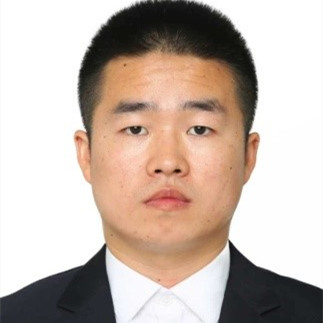
Shiqiang Liu
Tsinghua University, China
Shiqiang Liu (Member, IEEE) was born in Henan, China, in 1995. He
received the B.S. degree in Electrical Engineering and Automation
from Shandong University of Technology, Zibo, China, in 2017, the
M.S. degree in Electrical Engineering from Dalian University of
Technology, Dalian, China, in 2020, and the Ph.D. degree in
Electrical Engineering from the Graduate School of Maritime
Sciences, Kobe University, Hyogo, Japan, in 2025.
He is currently a Postdoctoral Researcher with the Department of
Electrical Engineering, Tsinghua University. His research interests
include bidirectional dc–dc converters, HEV/EV onboard chargers,
induction heating (IH) systems, and EV-connected dc microgrids
(EV-DCMGs). He received the 2024 IEEE Transactions on Power
Electronics (TPEL) Second Place Prize Paper Award in September 2025.
He also serves as a reviewer for IEEE Transactions on Power
Electronics (TPEL), IEEE Transactions on Industry Applications
(TIA), and related journals.
Special Session Co-Chair

Yaohua Li
Nanyang Technological University, Singapore
Yaohua Li (Member, IEEE and AAAI) received the B.Eng. degree in
electrical engineering from University of Calgary, Calgary, Canada,
in 2020, and the M.Sc. degree in power engineering in 2021 from
Nanyang Technological University, Singapore, where he is currently
pursuing the Ph.D. degree in electrical engineering.
His research interests include wireless power transfer,
high-frequency magnetics, robotics and artificial intelligence. He
also serves as a reviewer for IEEE Transactions on Power Electronics
(TPEL), IEEE Transactions on Industrial Electronics (TIE), IEEE
Transactions on Consumer Electronics (TCE) and IEEE Journal of
Emerging and Selected Topics in Power Electronics (JESTPE).
Special Session Co-Chair

Yong Ying
Kobe University, Japan
Yong Ying (Student Member, IEEE) was born in Zhejiang, China. He
received the B.S. degree in electrical engineering from the
Southwest Jiaotong University, Chengdu, China in 2023. He is
currently working toward the M.S. degree in electrical engineering
with the Graduate School of Maritime Sciences, Kobe University, Kobe
City, Japan.
His research interests include bidirectional single-stage
converters, resonant converters, and WPT systems.