Invited Speeches
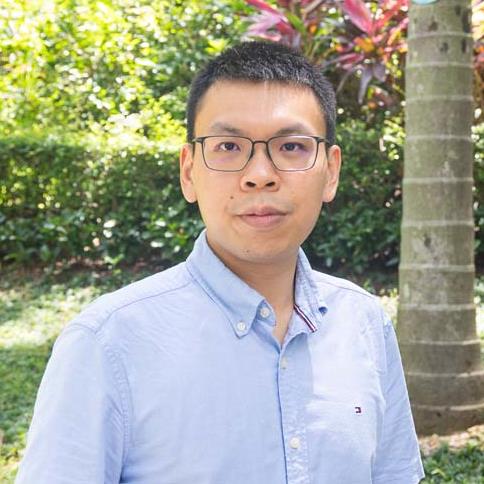
Kerui Li
City University of Hong Kong, Hong KongDr. Kerui Li is currently an Assistant Professor
in the Department of Electrical Engineering at City University of
Hong Kong. He received the B.Eng. degree from the South China
University of Technology (SCUT) in 2013, the M.Eng. degree from the
Sun Yat-sen University (SYSU) in 2016, and the Ph.D. degree from The
University of Hong Kong (HKU) in 2021. After finishing his PhD
degree, he served as a Research Fellow at Nanyang Technological
University and a Research Assistant Professor at both The Hong Kong
Polytechnic University and The University of Hong Kong. His research
interests include power electronics and wireless power transfer.
Dr. Li's professional services and research have been recognized
with several prestigious awards, including the IEEE Transactions on
Power Electronics Outstanding Reviewer Award (2025), two IEEE
Transactions on Power Electronics Prize Paper Awards (second place
in 2024 and first place in 2023), the IEEE Power Electronics Society
Ph.D. Thesis Talk Award (2022), and the University of Hong Kong
Power Engineering Prize (2020).
Title: Understanding Near-Field Wireless Power Transfer Systems with Complex Mutual Inductance and Negative Mutual Resistance
Mutual inductance is traditionally treated as a scalar in circuit theory. However, in wireless power transfer (WPT) systems operating in dissipative media such as seawater and biological tissues, it exhibits complex-valued behavior. At the same time, the phenomenon of negative mutual resistance (NMR) has been reported, often leading to confusion in interpretation and design. While complex mutual inductance (CMI) and NMR have been studied individually, they are fundamentally coupled and frequently coexist in practical WPT systems. This talk presents a unified and intuitive framework to understand CMI and NMR from a circuit-theoretic perspective. A generalized equivalent circuit model is introduced to reveal their physical origins and explain their simultaneous presence. It will be shown that these effects arise not only in dissipative media but also in any WPT system involving additional induced dissipative current loops, including relay resonators and unintended conductive paths such as nearby metallic objects or shielding structures. Building on this understanding, the talk further discusses how CMI and NMR can be leveraged through resonator re-compensation to enhance effective coupling and system performance. The concepts are illustrated with WPT examples supported by simulation and experimental results.
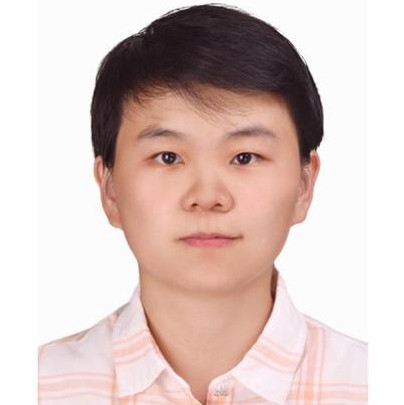
Yang Wu
Nanyang Technological University, SingaporeYang Wu is currently an Assistant Professor at
the School of Electrical and Electronic Engineering, Nanyang
Technological University, Singapore. She received the B.Eng. degree
in Electrical Engineering from the Department of Electrical
Engineering, Tsinghua University, Beijing, China, in 2017, with
Excellent Graduate Award. She obtained the Ph.D. degree in
Electrical Engineering from the same department at Tsinghua
University, Beijing, China, in 2022, with Excellent Ph.D. Graduate
Award.
From October 2022 to June 2025, she has been a Postdoctoral
Researcher at the Department of Energy, Aalborg University, Denmark,
where she has received the EU Marie Skłodowska-Curie Postdoctoral
Fellowship. She concurrently served as a Technical Specialist at AI
Stability, Denmark, where she has developed a stability prediction
software for power electronic converters. From March to June 2024,
she was a Visiting Postdoctoral Fellow at KTH Royal Institute of
Technology, Sweden.
Her research interests include power converter modeling and
analysis, condition monitoring and health management of electrical
assets, and advanced sensing technologies. She has published 37
SCI/EI-indexed papers, including 12 first-author papers in IEEE
Transactions journals. 7 of her first-author papers have been
selected as Popular Papers of IEEE. She holds 15 granted patents in
China and the United States. She is the recipient of the IEEE IAS
CMD Thesis Award, EECS Rising Star by Georgia Institute of
Technology, and has won two Best Paper and Best Presentation Awards
at international conferences. She also serves as a Technical Program
Committee member for several international conferences, including
IEEE ECCE (2024, 2025) and IEEE ITSC (2022).
Title: Emerging Stability Challenges in Power Systems with High Penetration of Grid-Forming
The increasing penetration of grid-forming (GFM) inverters is reshaping the dynamic behavior of future power systems, raising new stability challenges beyond those encountered in conventional grids. This talk will present some recent results on the small-signal and large-signal modeling and stability analysis of power systems with GFM inverters. A small-signal modeling framework is first developed with explicit consideration of frequency dynamics. The analysis reveals a new instability phenomenon in grid-forming/grid-following (GFM-GFL) interactions, where instability can arise when the phase-locked loop (PLL) bandwidth of the GFL inverter is low. Moreover, recent findings on large-signal stability of GFM inverters will be covered. Using a unified energy function, the transient stability of a single inverter with different types of proportional-integral (PI) control is characterized and subsequently extended to the analysis of multi-inverter systems. The results show that damping is not always beneficial to transient stability, highlighting a nontrivial trade-off in controller design. These findings challenge the existing intuitions regarding inverter interaction and stability, offering new perspectives on stability analysis and control design for inverter-dominated power systems.
Shuang Zhao
Hefei University of Technology, ChinaDr. Shuang Zhao is an Associate Professor at
Hefei University of Technology. He received his Bachelor's and
Master's degrees in Electrical Engineering from Wuhan University in
2012 and 2015, respectively, and earned his Ph.D. in Electrical
Engineering from the University of Arkansas in 2019.
In 2018, he was an assistant research scientist at ABB Corporate
Research Center, Raleigh, NC, USA. In 2019, he joined Infineon
Technologies Americas Corp. El Segundo, CA, USA serving as a Product
Application Engineer. In 2022, he joined Hefei University of
Technology where he serves as an Associate Professor and Huangshan
Scholar.
Dr. Zhao's research interests include wide bandgap (WBG) device
packaging and testing, modeling/simulation, advanced gate driver
technologies, high-frequency power conversion, and special power
supply technologies. He has published over 60 academic papers (20+
IEEE Trans articles), been granted 2 U.S. patents and more than 10
China patents, and authored 1 book.
He currently serves as a Guest Editor for multiple journals
including IEEE Transactions on Power Electronics, IEEE Open Journal
of Power Electronics, and IET Power Electronics. He is a Senior
Member of IEEE and a Senior Member of the China Electrotechnical
Society. He has also been the recipient of multiple Excellent Paper
Awards at IEEE conferences such as APEC, PCIM etc.
Title: Emerging Driving Technologies for Wide Bandgap Devices: From IC Design to System Applications
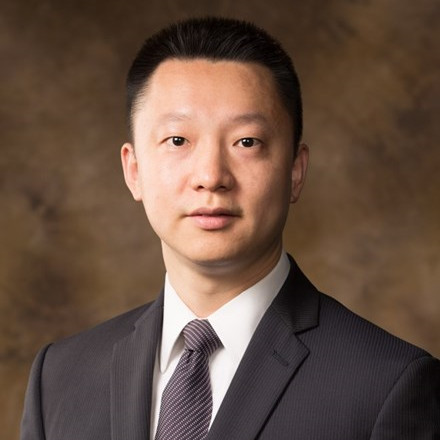
Zhong Chen
University of Arkansas, USAZhong Chen holds a doctorate in electrical engineering from North Carolina State University, a master’s degree in electrical engineering from the National University of Singapore and a bachelor’s degree in instrumentation science and engineering from Zhejiang University in China. Dr. Chen worked for six and half years as ESD specialist in Analog Technology Development at Texas Instruments prior to joining the faculty of the University of Arkansas in 2015 in Electrical Engineering.
Title: Emerging Driving Technologies for Wide Bandgap Devices: From IC Design to System Applications
Dawei Qiu
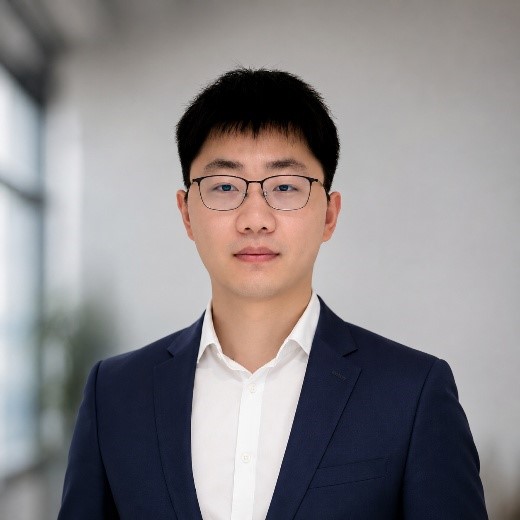
Nanyang Technological University, SingaporeDr. Dawei Qiu is a Tenure-track Assistant
Professor in the School of Electrical and Electronic Engineering at
Nanyang Technological University (NTU), Singapore. Prior to joining
NTU in May 2026, he was a Lecturer in Smart Energy Systems at the
University of Exeter, UK. He earned his B.Eng. in Electrical and
Electronic Engineering from Northumbria University in 2014, followed
by an M.Sc. in Power System Engineering from University College
London in 2015, and a Ph.D. in Electrical Engineering from Imperial
College London in 2020. Following his doctoral studies, he served as
a Research Associate at Imperial College London, where he was
promoted to Research Fellow in Market Design for Low-Carbon Energy
Systems in 2023.
Dr. Qiu's research focuses on advanced modelling and market design
for low-carbon energy systems. These methodologies have been widely
used to evaluate energy costs, carbon emissions, and ancillary
services of emerging technologies, such as flexible demand, energy
storage, electric vehicles, microgrids, virtual power plants, etc.
Dr. Qiu also leads research in reinforcement learning for power
systems, focusing on trustworthy AI decision-making. As PI, he has
led research projects around GBP£700K, including SAINTES: Safe and
scalable AI decisioN support Tools for Energy Systems, funded by the
UK government funding agency ARIA. He also leads the GW4 Alliance
project AI-Driven Digital Transformation for Sustainable Energy
Networks, and GW-HyGrid project Techno-Economic-Environmental
Evaluation Of Hydrogen For Grid Flexibility In The Great Western
Region.
Title: Trustworthy and Safe AI for Power Systems
Artificial Intelligence (AI), like reinforcement learning (RL), offers new opportunities for optimising power systems by managing complexity, adapting to real-time dynamics, processing vast amounts of data, and handling uncertainty. Despite these advantages, the practical deployment of AI in the power sector—particularly in power system optimisation—remains limited. This is largely due to challenges in ensuring safety, scalability, and reliability in AI algorithms. These limitations raise a critical question: How can AI enable power systems to achieve real-time, cost-effective optimisation while respecting physical constraints and ensuring safety and scalability? One promising direction is the development of Trustworthy AI, which emphasises safety, scalability, and strict adherence to operational constraints. The motivation behind this approach is to build confidence in AI’s capability to support power system optimisation in a secure and dependable manner. This seminar will introduce our developed Grid Foundation Code PowerZooJax and explore several emerging topics in power systems, such as the application of RL to peer-to-peer energy trading, optimal power flow, microgrid operation, virtual power plant, and ancillary service market.