Special Session 7 (Flyer Download)
Advanced Power Converters and Control Technologies for Renewable Energy and Energy Storage Systems
The increasing penetration of renewable energy
resources and the rapid deployment of energy storage systems (ESSs)
are creating new challenges and opportunities for power conversion
technologies. Advanced power converters are essential for achieving
high efficiency, superior power quality, reliable operation, and
enhanced grid support capabilities in photovoltaic (PV), wind energy
system, and ESSs. This special session focuses on emerging power
converter topologies, advanced control strategies, and enabling
technologies for next-generation renewable energy and energy storage
applications. The session aims to provide a platform for researchers
and practitioners to share the latest developments in converter
design, modulation methods, control techniques, thermal management,
reliability enhancement, and grid integration of power electronic
systems.
1. Novel power converter topologies and architectures for renewable
energy and energy storage systems;
2. High-efficiency, high-power-density, and high-reliability power
conversion techniques;
3. Wide-bandgap (SiC/GaN)-based power converters and advanced
integration technologies;
4. Advanced modulation, control, optimization, and grid-supportive
operation techniques;
5. Thermal management, electromagnetic interference (EMI)
mitigation, and packaging technologies;
6. Fault diagnosis, protection, and reliability enhancement
techniques.
Click to Submit
Please choose "Special Session 7" after log in.
Special Session Chair
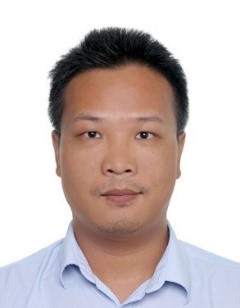
Xiong Liu
Jinan University, China
Xiong Liu received the B.E. and M.Sc. degrees in electrical
engineering from the Huazhong University of Science and Technology,
Wuhan, China, in 2006 and 2008, respectively, and the Ph.D. degree
in electrical engineering from the School of Electrical and
Electronic Engineering, Nanyang Technological University, Singapore,
in 2013.
From September 2011 to January 2012, he was a Visiting Scholar with
the Department of Energy Technology, Aalborg University, Denmark.
From April 2012 to December 2013, he was a Researcher with the
Energy Research Institute, Nanyang Technological University. From
December 2013 to July 2020, he was a Principal Technologist in
Rolls-Royce Electrical, Rolls-Royce Singapore Pte. Ltd., Singapore.
During the work in Rolls-Royce, he has led various research projects
in Rolls-Royce@ NTU Corp Lab and supervised 3 Ph. D students. From
September 2020 till now, He is an Associate Professor with the
Energy Electricity Research Center, International Energy College,
Jinan University, Zhuhai, China. His research interests include
power electronics, motor drive, and electrical/hybrid propulsion
system for marine and aerospace.
In his current position, he has led various research projects
including one NSFC funded project, and won the sponsorship from
Major Talent Program of Guangdong Province. He has published more
than 70 papers including 16 first and corresponding authored tier-1
top SCI IEEE Transactions papers, 6 patents granted in US or Europe,
and a few Chinese granted/filed patent applications. He has been
nominated as World’s Top 2% Scientists 4 times by Stanford and
Elsevier in 2020, 2021, 2022, and 2024 respectively. He received the
Innovation Award for IEEE Competition on Energy Access and Off-grid
Systems in 2026.
Special Session Co-Chair
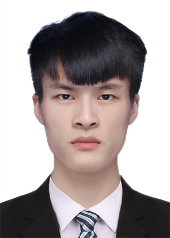
Xiaojun Deng
Nanyang Technological University, Singapore
Dr. Xiaojun Deng received the B.Sc. degree in Electrical Engineering from China University of Mining and Technology, Xuzhou, China, in 2019, and received the Ph.D. degree in Electrical Engineering from Hunan University, Changsha, China, in 2024. He is currently a Research Fellow with School of Electrical and Electronic Engineering, Nanyang Technological University, Singapore. His current research interests include converter topology, modulation, and advanced control algorithms for renewable energy systems and AI data centers.
Special Session Co-Chair
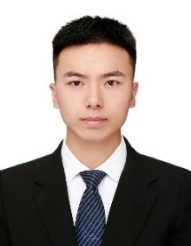
Xiaonan Zhu
Hunan University, China
Dr. Xiaonan Zhu received the B.Sc. degree in Electrical Engineering from China University of Petroleum, Qingdao, China, in 2017, and received the Ph.D. degree in Electrical Engineering from Hunan University, Changsha, China in 2022. He worked as an Assistant Research Fellow at Hunan University, Changsha, China. He is currently an Assistant Professor at Hunan University, Changsha, China. His research interests include the power converter modulation techniques, grid integration of renewable energy, and control algorithms in power electronics.
Special Session Co-Chair
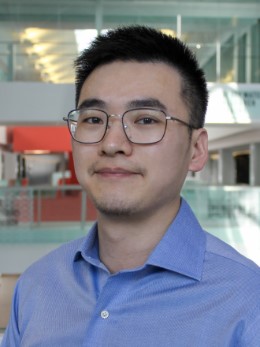
Yang Chen
Hunan University, China
Dr. Yang Chen received his B.Sc. and M.Sc. degree in electrical engineering
from Beijing Institute of Technology, Beijing, China, in 2011 and
2013, respectively, and his Ph.D. degree in Electrical and Computer
Engineering in 2017 from Queen's University, Kingston, Canada. Since
2026, he joined as an assistant professor at Hunan University,
Changsha, China.
Over 15 years, he has been devoted to the development of low-cost,
high-performance resonant converter topologies and control
techniques, as well as the application of wide-band-gap
semiconductors in consumer electronics, industrial power supplies,
and electrical vehicles. He has taken the technical lead in 13 NSERC
research projects as well as collaborative projects with industry
leaders including Murata, Magna, and various others. He is the
author of 38 technical papers published in IEEE journals and
conferences. He holds 23 granted US/China patents.
He is the co-founder of DigiQ Power Ltd., a company focusing on the
commercialization of high-performance digital power supplies. He is
an alumnus of Lab2Market, a Canadian Federal entrepreneur program,
and a finalist (7/109) of Murata and pSemi Marketlink Innovation
Event in 2021.
Special Session Co-Chair
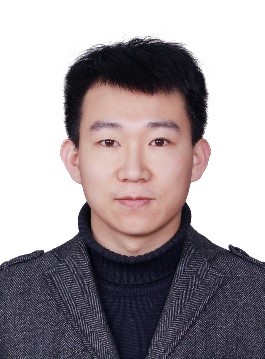
Meng Chen
University of Cambridge, UK
Dr. Meng Chen received the B.Sc. degree in electrical engineering and automation from the Qingdao University of Science and Technology, Qingdao, China, in 2013. He received the Ph.D. degree in power system and automation from North China Electric Power University, Beijing, China, in 2018, and the Ph.D. degree in energy technology from Aalborg University, Aalborg, Denmark, in 2022. In 2021, he was an Academic Guest with the Automatic Control Laboratory, ETH Zurich, Switzerland. He was a Postdoc with AAU Energy, Aalborg University, from 2022 to 2023. He is currently a UKRI Postdoctoral Individual Fellow (MSCA Postdoctoral Fellowships Guarantee Funding) with the Department of Engineering, University of Cambridge, Cambridge, United Kingdom. His research interests include the control, stability, and optimization of sustainable power and energy systems.