Tutorial 2 (Flyer Download)
Harnessing and Monetizing the Residual Capacities of Community IBRs for Coordinated Power Quality Management
The rapid proliferation of inverter-based resources (IBRs) in
distribution systems has fundamentally transformed both the physical
and economic landscape of power quality management. Traditionally,
voltage quality issues such as voltage unbalance (VU) have been
mitigated through dedicated compensation devices, which incur
significant capital and operational costs. Recent research
demonstrates that substantial residual capacity exists within
community IBRs—capacity that remains underutilized during normal
operation. Leveraging this latent flexibility enables a paradigm
shift from hardware-intensive solutions toward software-defined,
coordinated control strategies. In particular, network-wide
optimization frameworks can unlock this residual capacity to
mitigate power quality issues effectively, while respecting inverter
constraints such as current limits and apparent power boundaries.
Building upon this foundation, the tutorial will introduce advanced
control and optimization techniques for coordinated power quality
management. Beyond steady-state optimization, it is critical to
consider the dynamic behavior of IBRs during control actions.
Improper reference switching may excite oscillatory modes, leading
to instability or degraded performance. Recent developments in
mode-constrained, two-stage optimization frameworks address this
challenge by explicitly shaping current injection trajectories in
the frequency domain, ensuring fast yet stable transitions without
exciting dominant oscillatory modes. The tutorial will
systematically bridge steady-state coordination and dynamic control,
providing participants with a unified understanding of how to design
both optimal setpoints and transient-safe control actions in
IBR-rich systems.
Finally, the tutorial extends from technical coordination to
economic monetization of power quality services. In deregulated
distribution systems, multiple stakeholders—including distribution
system operators (DSOs) and distributed energy resource (DER)
owners—have distinct objectives. Game-theoretic approaches,
particularly Stackelberg game formulations, provide a principled
framework to align these incentives by enabling DSOs to price
voltage quality services and DERs to respond optimally. By
integrating physical-layer optimization with market mechanisms, the
tutorial highlights how residual IBR capacity can be transformed
into tradable services, thereby creating new revenue streams while
enhancing system reliability. Practical case studies and
implementation insights will be included to illustrate real-world
applicability.
This tutorial presents a comprehensive framework for harnessing
and monetizing the residual capacities of community inverter-based
resources (IBRs) for coordinated power quality management in modern
distribution systems. It first introduces network-level optimization
methods that exploit unused inverter capacity to mitigate voltage
quality issues such as voltage unbalance, while satisfying
operational constraints. It then addresses dynamic performance
challenges by presenting advanced current trajectory optimization
techniques that ensure fast and stable control without exciting
oscillatory modes. Finally, the tutorial explores market-based
mechanisms, including Stackelberg game models, to enable
economically efficient pricing and participation of distributed
resources in voltage quality services. By integrating control,
optimization, and economic coordination, this tutorial provides a
holistic pathway for transforming latent IBR flexibility into both
technical and financial value in future power systems.
Tutorial Speakers

Pengfeng Lin
University of Cambridge, UK & Shanghai Jiao Tong University, China
Pengfeng Lin is now an assistant professor at Shanghai Jiao Tong
University and a Marie Skłodowska-Curie Actions (MSCA) Fellow at
University of Cambridge.
He received the B.S. and M.S. degrees in electrical engineering from
Southwest Jiaotong University, China, in 2013 and 2015,
respectively, and the Ph.D. degree in the Interdisciplinary Graduate
Programme from Nanyang Technological University (NTU), Singapore, in
2020. He subsequently worked as a Research Fellow at the Energy
Research Institute @ NTU and as a Smart Grid Energy Expert /
Research Scientist at Électricité de France (EDF). He has been
recognized among the global top 2% scientists. He serves as a
standard chair of IEEE IAS IPCC. His research interests include
power system stability and reliability analysis, cyber-physical
security of smart grids, and artificial intelligence–driven
analytics for power systems.
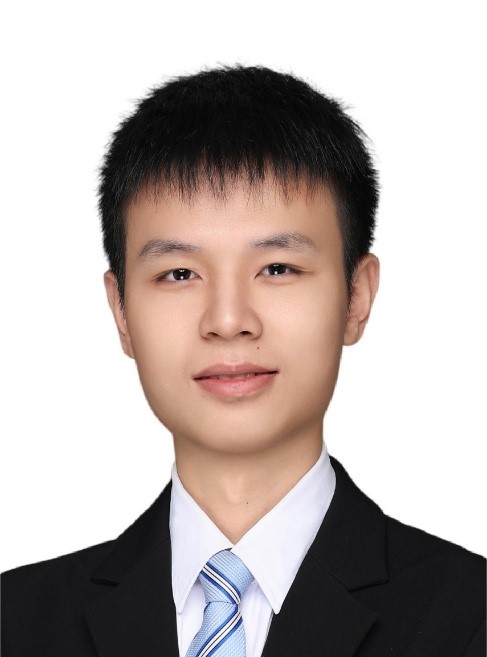
Pengcheng Yang
Hangzhou City University, China
Pengcheng Yang is currently an Associate Professor at Hangzhou City University, China. He received the B.Eng. degree in automation from Huazhong University of Science and Technology, China, in 2015, and the Ph.D. degree in electrical engineering from Zhejiang University, China, in 2020. He subsequently worked as a Research Fellow at Zhejiang University until 2023. He was a recipient of the China Electric Power Science and Technology Progress Award and the Electric Power Innovation Award in 2022. His research interests primarily focus on the control of renewable energy systems, active grid-forming microgrids, and the collaborative governance of power quality in distributed power systems.