Tutorial Speakers
Tutorial 1 — Control and Protection of Power Electronics-Dominated Power System
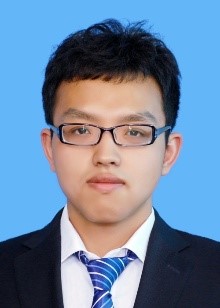
Shan He
Hefei University of Technology, China
Shan He (Senior Member, IEEE) received the B.S. degree in
electrical engineering from Northeast Electric Power University,
Jilin, China, in 2015, the M.S. degree in electrical engineering
from Zhejiang University, Hangzhou, China, in 2018, and the Ph.D.
degree in electrical engineering from Aalborg University, Aalborg,
Denmark, in 2022.
From 2022 to 2025, he worked as a Postdoc with Department of Energy,
Aalborg University, Aalborg, Denmark. In 2021, he was a Visiting
Researcher with RWTH Aachen University, Aachen, Germany. In 2023, he
was a Research Associate with Kiel University, Kiel, Germany. In
2025, he was a Visiting Researcher with Norwegian University of
Science and Technology, Tronholm, Norway. He is currently a Full
Professor with School of Electric Engineering and Automation, Hefei
University of Technology, China. His research interests include
renewable energy integration, energy storage, and nuclear fusion.
Dr. He was the recipient of Nordic Energy Challenge Award, Future
Digileader Award, IES-SYPA Award, and PCMP Best Reviewer Award. He
served as Guest Associate Editor for IEEE TRANSACTIONS ON POWER
ELECTRONICS, Guest Managing Editor for INTERNATIONAL JOURNAL OF
ELECTRICAL POWER & ENERGY SYSTEMS, Associate Editor for Q1 Journals
PROTECTION AND CONTROL OF MODERN POWER SYSTEMS, ENGINEERED SCIENCE.
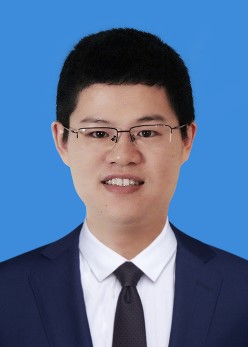
Chao Wu
Shanghai Jiao Tong University, China
Chao Wu (Senior Member, IEEE) received the B.Eng. degree from He
Fei University of Technology, Hefei, China, in 2014, and the Ph.D.
degree from Zhejiang University, Hangzhou, China, in 2019, both in
electrical engineering.
Currently, he is an Associate Professor with the Department of
Electrical Engineering, Shanghai Jiao Tong University, Shanghai,
China. From 2019 to 2021, he was a Postdoctoral Researcher with the
Department of Energy Technology, Aalborg University, Aalborg,
Denmark. His research interests include modeling, control, and
stability analysis of power electronics in renewable energy
applications.
Guoqing Gao
Aalborg University, Denmark
Guoqing Gao (Member, IEEE) received the B.S. degree from Xidian
University, Xi’an, China, in 2017, the M.S. degree from Xi’an
Jiaotong University, Xi’an, China, in 2020, and the Ph.D. degree
from Aalborg University, Aalborg, Denmark in 2024, all in electrical
engineering.
Since 2024, he has been with the Department of Energy Technology,
Aalborg University, as a Post-Doctoral Researcher. He is currently a
Carlsberg Internationalization Postdoctoral Fellow with Imperial
College London, Oxford University, and Aalborg University.
He serves as a CIGRE Working Group Member (JWG C4/A3.79: Temporary
Overvoltage Protection Technologies for High-Voltage Transmission
Systems with Large-Scale Renewable Energy Bases), Leading Guest
Editor for Electronics and Guest Editor for Frontiers in Energy
Research. His research interests include control, protection, and
stability analysis of power electronic converter interfaced grids.
Tutorial 2 — Harnessing and Monetizing the Residual Capacities of Community IBRs for Coordinated Power Quality Management
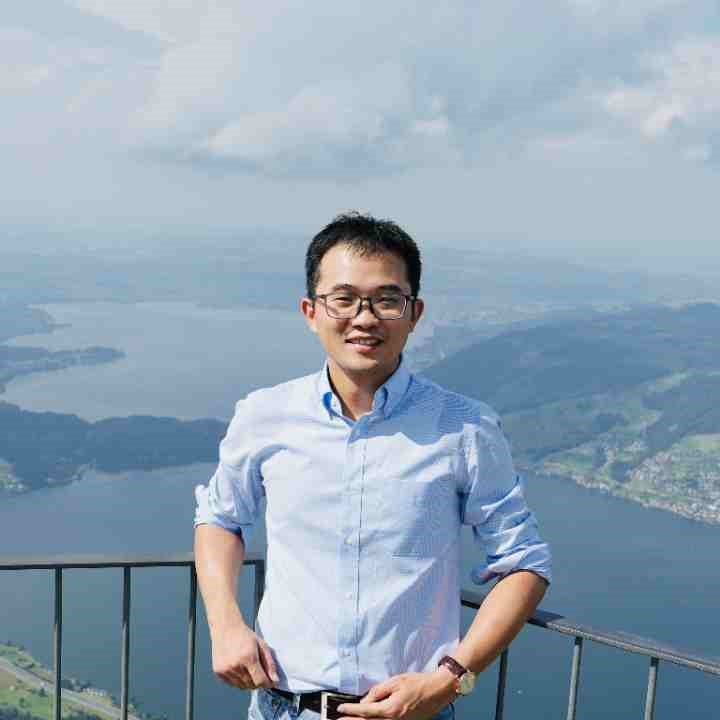
Pengfeng Lin
University of Cambridge, UK & Shanghai Jiao Tong University, China
Pengfeng Lin is now an assistant professor at Shanghai Jiao Tong
University and a Marie Skłodowska-Curie Actions (MSCA) Fellow at
University of Cambridge.
He received the B.S. and M.S. degrees in electrical engineering from
Southwest Jiaotong University, China, in 2013 and 2015,
respectively, and the Ph.D. degree in the Interdisciplinary Graduate
Programme from Nanyang Technological University (NTU), Singapore, in
2020. He subsequently worked as a Research Fellow at the Energy
Research Institute @ NTU and as a Smart Grid Energy Expert /
Research Scientist at Électricité de France (EDF). He has been
recognized among the global top 2% scientists. He serves as a
standard chair of IEEE IAS IPCC. His research interests include
power system stability and reliability analysis, cyber-physical
security of smart grids, and artificial intelligence–driven
analytics for power systems.
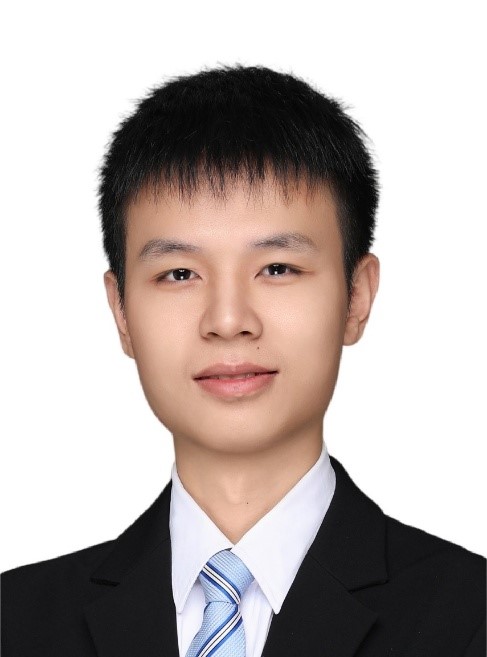
Pengcheng Yang
Hangzhou City University, China
Pengcheng Yang is currently an Associate Professor at Hangzhou City University, China. He received the B.Eng. degree in automation from Huazhong University of Science and Technology, China, in 2015, and the Ph.D. degree in electrical engineering from Zhejiang University, China, in 2020. He subsequently worked as a Research Fellow at Zhejiang University until 2023. He was a recipient of the China Electric Power Science and Technology Progress Award and the Electric Power Innovation Award in 2022. His research interests primarily focus on the control of renewable energy systems, active grid-forming microgrids, and the collaborative governance of power quality in distributed power systems.
Tutorial 3 — Unified Modelling and Active Damping Control for Grid-following Inverter with LCL Filter and Multi-mass Motor Drive systems based on Electrical-Mechanical Analogy Principle
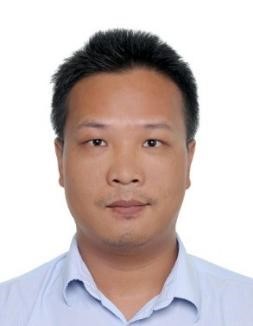
Xiong Liu
Jinan University, China
Xiong Liu received the B.E. and M.Sc. degrees in electrical engineering from the Huazhong University of Science and Technology, Wuhan, China, in 2006 and 2008, respectively, and the Ph.D. degree in electrical engineering from the School of Electrical and Electronic Engineering, Nanyang Technological University, Singapore, in 2013.
From September 2011 to January 2012, he was a Visiting Scholar with the Department of Energy Technology, Aalborg University, Denmark. From April 2012 to December 2013, he was a Researcher with the Energy Research Institute, Nanyang Technological University. From December 2013 to July 2020, he was a Principal Technologist in Rolls-Royce Electrical, Rolls-Royce Singapore Pte. Ltd., Singapore. During the work in Rolls-Royce, he has led various research projects in Rolls-Royce@ NTU Corp Lab and supervised 3 Ph. D students. From September 2020 till now, He is an Associate Professor with the Energy Electricity Research Center, International Energy College, Jinan University, Zhuhai, China. His research interests include power electronics, motor drive, and electrical/hybrid propulsion system for marine and aerospace.
In his current position, he has led various research projects including one NSFC funded project, and won the sponsorship from Major Talent Program of Guangdong Province. He has published more than 70 papers including 16 first and corresponding authored tier-1 top SCI IEEE Transactions papers, 6 patents granted in US or Europe, and a few Chinese granted/filed patent applications. He has been nominated as World's Top 2% Scientists 4 times by Stanford and Elsevier in 2020, 2021, 2022, and 2024 respectively. He received the Innovation Award for IEEE Competition on Energy Access and Off-grid Systems in 2026.
Songtao Huang
Nanyang Technological University, Singapore
Songtao Huang received the B.S. degree in School of Control Science and Engineering from Shandong University, Jinan, China, in 2017, and the Ph.D. degree in School of Artificial Intelligence and Automation from Huazhong University of Science and Technology, Wuhan, China, in 2023.
He subsequently worked as a Postdoctoral Researcher at Huazhong University of Science and Technology and as a Visiting Research Associate with the Department of Engineering, King's College London, London, U.K. He is currently a Research Fellow with the Energy Research Institute, Nanyang Technological University, Singapore.
His research interests focus on the modelling, control, and stability of power electronic converters, particularly grid-connected inverters, resonant and multiresonant control, active damping, impedance- and passivity-based stability analysis, digital control effects, weak-grid interaction, and multi-inverter systems. He is a Member of the IEEE and has published 25 IEEE/EI-indexed papers, including 10 as first or corresponding author. He has led two laboratory open-fund research projects and holds five Chinese invention patents. He serves as a reviewer for several leading IEEE and IET journals in power electronics, power systems, and renewable energy, as well as a Technical Program Committee Member for SPIES. He also served as a Session Chair at ICIEA 2026.
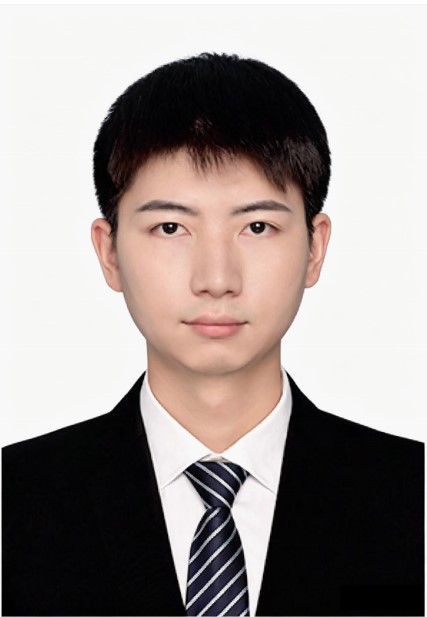
Yukai Huang
King's College London, United Kingdom
Yukai Huang received the B.S. degree in Automation in 2020 and the Ph.D. degree in Control Science and Engineering in 2025, both from the School of Artificial Intelligence and Automation, Huazhong University of Science and Technology, Wuhan, China. He is currently a Research Associate with the Department of Engineering, King's College London, London, U.K.
His research interests focus on the modelling, control, and stability of power electronic converters and inverter-dominated power systems, particularly grid-connected inverters, impedance-based stability analysis, wideband oscillation and resonance suppression, digital control effects, weak-grid interactions, grid-forming control, and multi-inverter systems. His research also involves high-power power electronic conversion systems and grid emulation, including the modelling, control, and experimental validation of medium-frequency converters and high-power grid emulators.
Tutorial 4 — Pragmatic Integration of Large Language Models into Biomedical Design and Wireless Power Transfer
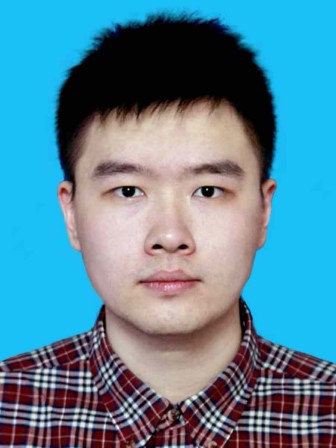
Heshou Wang
The Hong Kong Polytechnic University, China
Heshou Wang received his M.Sc. degree and Ph.D. degree in Electrical Engineering from The Hong Kong Polytechnic University, Hong Kong, in 2018 and 2022, respectively. From 2018 to 2019, he was a research assistant at the Department of Electrical Engineering, The Hong Kong Polytechnic University, where he is currently a postdoctoral fellow. His main research interests include applied electromagnetics, wireless power transfer, and electric vehicles.
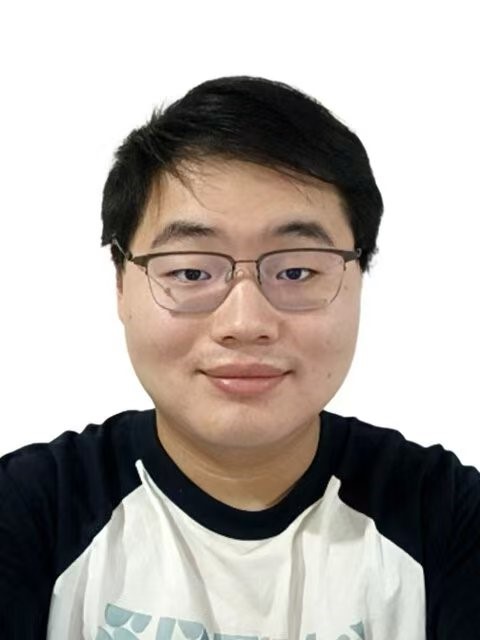
Tongfei Shen
Qingdao Huanghai University, China & City University of Hong Kong, China
Tongfei Shen is a Professor in the Department of Artificial Intelligence at Qingdao Huanghai University, a part-time Postdoctoral Fellow at The Hong Kong Polytechnic University, and a Ph.D. in the Department of Computer Science, City University of Hong Kong. At Qingdao Huanghai University, he teaches and conducts research in artificial intelligence. His research centres on artificial intelligence and its scientific applications, spanning computational immunology, AI for science, and deep learning. In computational immunology, he works on T-cell receptor related problems, developing machine learning methods for T-cell receptor repertoire analysis in autoimmune diseases and related prediction tasks. In AI for science, he studies how large language models and deep learning architectures can be engineered for reliable reasoning and prediction in biomedical domains, with emphasis on interpretability, retrieval grounding, and responsible deployment. In deep learning, his interest lies in architectures and training practices that remain dependable when applied to real-world biomedical data. He is the lead author of the review “Pragmatic Engineering of Large Language Model Integration in Biomedical Drug Design”, on which this tutorial is based. A recurring theme across his work is building deep learning systems that remain interpretable, verifiable, and human-supervised when applied to high-stakes biomedical problems.
Tutorial 5 — Advanced Modulation and Control for Hardware-Efficient Grid-Interfaced Converters
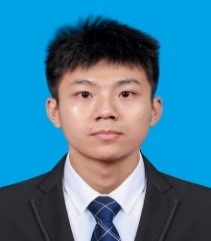
Zhijian Zhang
Nanyang Technological University, Singapore
Zhijian Zhang received the B.S. degree in electrical engineering from the North University of China, Taiyuan, China, in 2018, the M.S. degree in electrical engineering from Beijing Jiaotong University, Beijing, China, in 2021, and the Ph.D. degree in power electronics and electrical drives from Harbin Institute of Technology, Harbin, China, in 2025. From 2025 to 2026, he was a Postdoctoral Fellow with the Department of Industrial and Systems Engineering, The Hong Kong Polytechnic University, Hong Kong, China. He is currently a Research Fellow with the Energy Research Institute, Nanyang Technological University, Singapore. His current research interests include permanent-magnet synchronous motor control, high-efficiency AC–DC converters, and control of Vienna rectifiers.
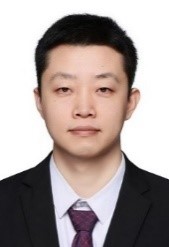
Zicheng Zhang
Nanyang Technological University, Singapore
Zicheng Zhang received the B.Sc. degree in automation, the M.Sc. degree in control engineering, and the Ph.D. degree in control theory and control engineering from Shandong University, Jinan, China, in 2014, 2017 and 2026, respectively. He is currently a Research Fellow with the Energy Research Institute, Nanyang Technological University, Singapore. His research interests include modelling, stability analysis, and robust control of grid-following and grid-forming power converters.